Walk into a thoughtfully designed living room or a modern plant studio and you might notice a plant that looks almost sculptural—its leaves branching outward like the antlers of a deer, mounted on a wooden board instead of sitting in a pot.
That remarkable plant is the Staghorn Fern (Platycerium bifurcatum), one of the most distinctive indoor plants you can grow.
Unlike most houseplants that live quietly in soil-filled containers, Staghorn Ferns follow a very different lifestyle. They grow on vertical surfaces, collect moisture from the air, and create dramatic foliage that can transform a plain wall into living botanical art.
At first glance, their unusual growth habit may seem intimidating. But once you understand how they grow in nature, caring for a Staghorn Fern becomes surprisingly simple.
In this guide, we’ll explore how to grow, water, mount, and maintain Staghorn Ferns indoors, along with practical tips that help gardeners enjoy these plants for decades.
What Is a Staghorn Fern?
The Staghorn Fern (Platycerium bifurcatum) is a tropical epiphytic plant native to Australia and parts of Southeast Asia. Instead of growing in soil, it attaches itself to tree trunks or branches where it absorbs nutrients from rain, air, and organic debris. Staghorn Fern Care Guide_ 5 Sec…
Plants with this growth habit are called epiphytes, meaning they grow on other surfaces for support rather than rooting directly in the ground.
This natural adaptation explains why Staghorn Ferns are often displayed mounted on wooden boards, bark slabs, or hanging baskets, making them a favorite among interior designers and plant enthusiasts alike.
Botanical Profile
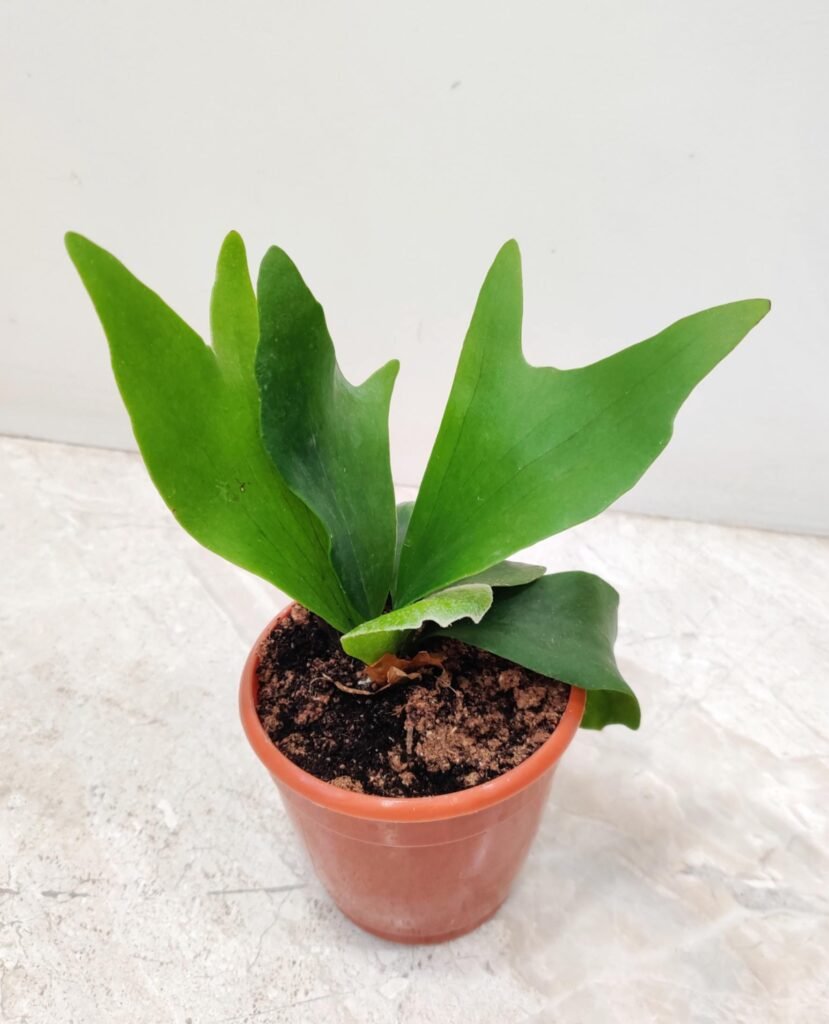
| Attribute | Details |
|---|---|
| Botanical Name | Platycerium bifurcatum |
| Common Names | Staghorn Fern, Elkhorn Fern |
| Plant Type | Epiphytic fern |
| Mature Size | 2–3 feet tall and wide |
| Native Region | Asia and Australia |
| Light Requirement | Bright indirect light |
| Temperature | 10°C – 38°C |
| Soil Requirement | None (epiphytic plant) |
Because of its unique structure and dramatic foliage, this plant is often used as living wall art or decorative mounted plants in modern interiors.
If you’re exploring more unique plant varieties or looking for wholesale fern plants for landscaping projects, you can also explore fern plant collections.
Why Staghorn Ferns Look So Unique
One of the most fascinating aspects of Staghorn Ferns is their two different types of leaves, each serving a specific purpose.
Shield Fronds: The Plant’s Natural Armor
At the base of the plant, you’ll notice flat, round leaves that gradually turn brown and papery. These are called shield fronds.
Although they may look dry or old, these leaves play an essential role in the plant’s health. They protect the roots, anchor the plant to its mounting surface, and collect organic material that provides nutrients.
Because of this, shield fronds should never be removed, even when they turn brown.
Antler Fronds: The Signature Feature
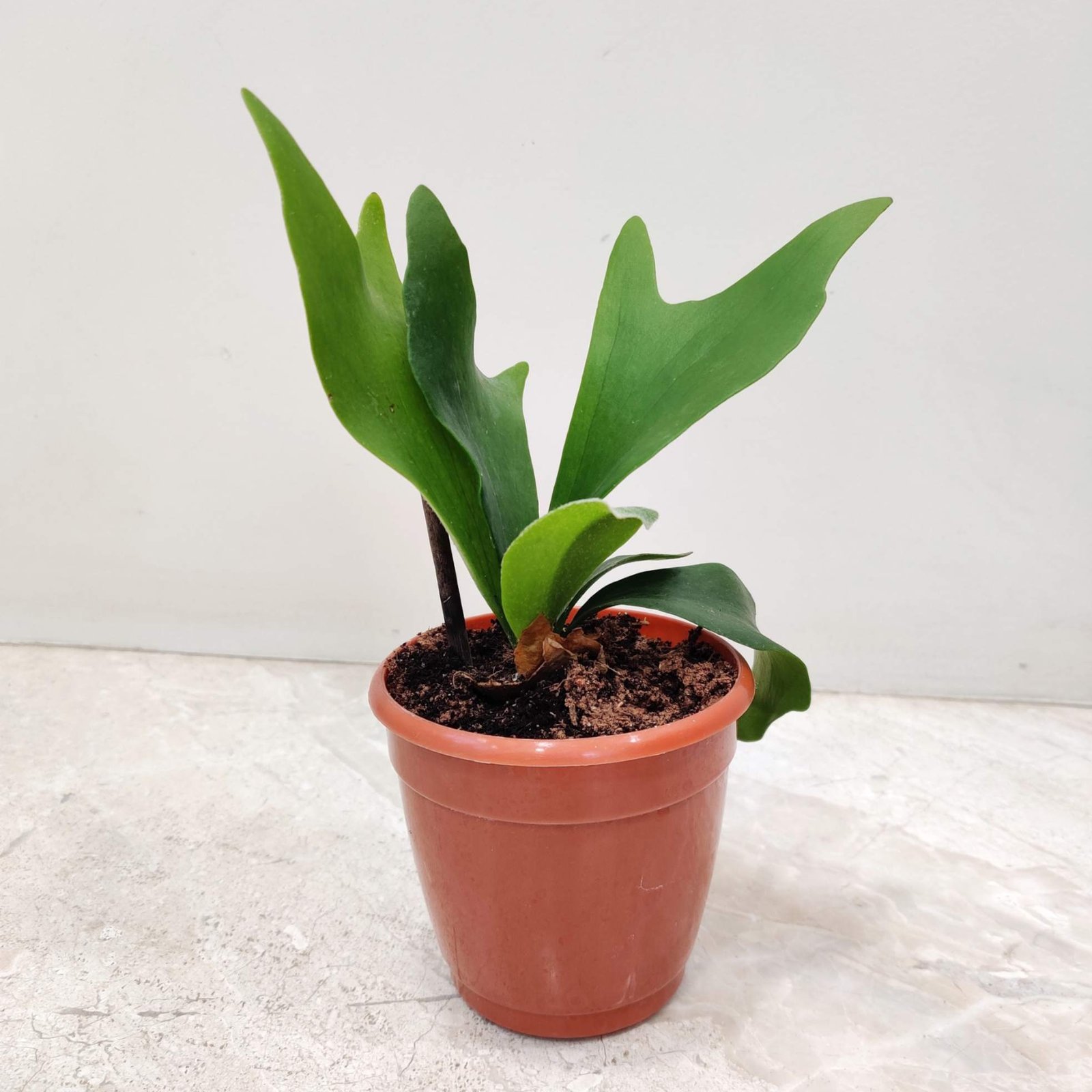
The long branching leaves that resemble deer antlers are called antler fronds.
These dramatic leaves are responsible for the plant’s name and visual appeal. As the plant matures, the antler fronds become larger and more complex, creating a striking architectural appearance.
For gardeners who love decorative greenery, Staghorn Ferns are among the best plants for vertical plant displays and statement wall gardens.
Secret 1: Staghorn Ferns Don’t Need Soil
One of the most surprising facts about Staghorn Fern care is that soil is not required.
In nature, these ferns grow attached to trees where their roots are surrounded by organic debris rather than soil.
Because of this, gardeners typically grow them by mounting them on wooden boards or bark slabs.
How to Mount a Staghorn Fern
The mounting process is straightforward:
- Wrap the root ball in moist sphagnum moss
- Place it on a wooden board or bark slab
- Secure the plant using fishing line or twine
- Hang it vertically
Over time, the plant’s shield fronds grow over the mounting materials, naturally securing the fern in place.
Many gardeners also enhance mounted displays using decorative materials such as natural pebbles, which help improve drainage and aesthetics.
Secret 2: The “Dusty” Leaves Are Actually Protective
If you examine a Staghorn Fern closely, you’ll notice a slightly fuzzy coating on the leaves.
This is not dust.
The coating is made of tiny hair-like structures called trichomes, which help the plant absorb moisture and protect it from strong sunlight.
Because these structures are essential to the plant’s survival, it’s important not to wipe or polish the leaves. Removing this layer can damage the plant’s natural protection system.
Secret 3: Watering Works Differently
Watering a Staghorn Fern is quite different from watering traditional houseplants.
Because the plant is mounted, pouring water from a watering can often causes the water to run off before reaching the roots.
Instead, experienced growers recommend the soak method.
How to Water a Staghorn Fern
- Remove the mounted plant from the wall
- Submerge the root ball in water
- Allow it to soak for about 10–20 minutes
- Let it drain completely before rehanging
In warmer months, watering once a week is usually sufficient. In cooler months, watering every two or three weeks may be enough.
Secret 4: Brown Leaves Are Not Always a Problem
Many plant owners worry when they see brown leaves forming on their Staghorn Fern.
However, in most cases this is perfectly natural.
Shield fronds naturally turn brown as they mature, and these leaves help store nutrients and protect the roots.
Similarly, mature plants may develop brown patches on the underside of antler fronds. These structures are part of the plant’s reproductive process and should not be removed.
Understanding these natural changes helps prevent unnecessary pruning that could harm the plant.
Secret 5: These Plants Can Live for Decades
Although young Staghorn Ferns start small, they can eventually grow into impressive specimens measuring two to three feet wide.
With proper care, these plants can live for many decades. Some specimens in botanical collections have been maintained for more than 50 years.
Because of their longevity and sculptural beauty, many plant lovers consider them living pieces of botanical art rather than temporary decorative plants.
Creating the Perfect Indoor Environment
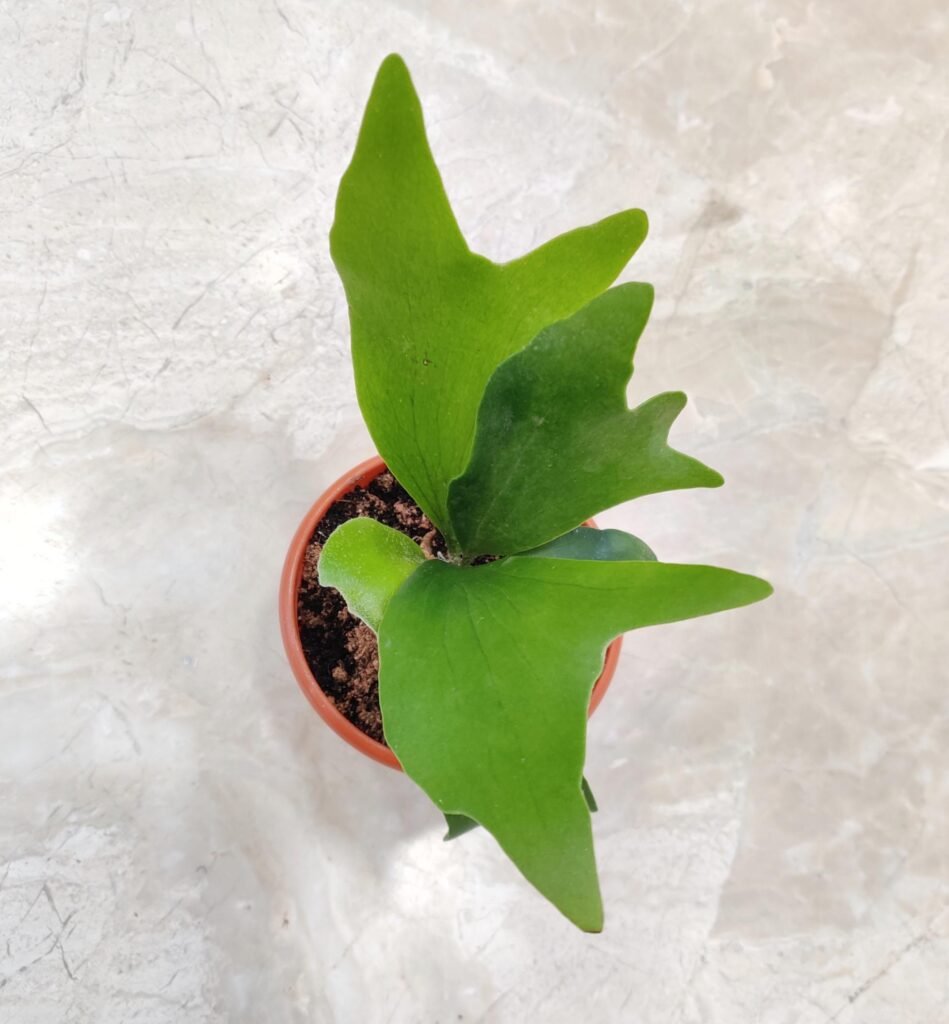
To keep a Staghorn Fern healthy indoors, it helps to recreate the conditions of tropical forests.
Light
Staghorn Ferns thrive in bright, indirect light. Direct sunlight can scorch their leaves, while extremely low light can slow growth.
Temperature
They prefer warm temperatures between 15°C and 27°C.
Humidity
Humidity plays a crucial role in the health of these plants. Bathrooms, kitchens, or rooms with humidifiers often provide ideal conditions.
Feeding Your Staghorn Fern
While Staghorn Ferns are not heavy feeders, they benefit from occasional fertilization.
During spring and summer, you can add a diluted liquid fertilizer to the soaking water once a month to encourage healthy growth.
During winter, fertilization can be reduced.
Propagating Staghorn Ferns
Staghorn Ferns are usually propagated through division, where a smaller section is separated from a mature plant.
Each division should include a portion of the root mass and at least one healthy frond.
If you’d like to learn more about fern propagation techniques, you can explore detailed guide here.
Visiting a Nursery to See Ferns in Person
While online guides are helpful, seeing mature fern plants in person can be incredibly inspiring.
Many plant lovers enjoy visiting plant nurseries to explore large collections of tropical plants and learn directly from growers.
If you’re ever in Pune, you can explore our beautiful plant collection in person.
These tours provide an opportunity to see rare plants, learn about plant care, and understand how professional nurseries cultivate tropical greenery.
Buying Plants or Ordering in Bulk
For homeowners, landscapers, or businesses looking to purchase plants in larger quantities, many nurseries offer wholesale plant programs. You can explore wholesale plant options here:
If you’re new to ordering plants online or planning bulk purchases, the ordering guide can help simplify the process
Need Help Choosing the Right Plants?
If you have questions about plant care, ordering, or selecting the right plants for your home or project, you can explore the nursery’s FAQ section Or for quick assistance, you can also connect directly via WhatsApp.
Discover More Plant Care Guides
If you enjoy learning about plants, propagation, and indoor gardening, you can explore more educational articles in the Sanjay Nursery blog section. These guides cover everything from indoor plant care to landscaping ideas.
Decorative Planters for Indoor Plants
The right planter can elevate the visual impact of indoor plants. If you’re looking for stylish ceramic planters and decorative pots for your plant collection, you can explore
These planters complement modern interiors and pair beautifully with tropical plants like ferns and foliage plants.
Final Thoughts
The Staghorn Fern (Platycerium bifurcatum) is a fascinating plant that challenges traditional gardening expectations. It doesn’t need soil, it thrives on vertical surfaces, and it can live for decades with proper care.
By providing bright indirect light, moderate humidity, and occasional soaking, you can enjoy a thriving Staghorn Fern that grows into a striking centerpiece in your home.
What begins as an unusual plant mounted on a board often becomes something far more special—a living sculpture that brings natural beauty, texture, and life into indoor spaces.
FAQs About Staghorn Fern (Platycerium bifurcatum)
1. How often should I water a Staghorn Fern?
Staghorn Ferns are usually watered using the soak method. During warm months, watering once a week is ideal. In cooler months, watering every two to three weeks is usually sufficient. Always allow the moss or mounting medium to dry slightly between watering sessions.
2. Do Staghorn Ferns need soil to grow?
No, Staghorn Ferns are epiphytic plants, which means they naturally grow on trees rather than in soil. They are commonly mounted on wooden boards or grown in hanging baskets with sphagnum moss.
3. What type of light does a Staghorn Fern need?
Staghorn Ferns grow best in bright, indirect light. Direct sunlight can burn their leaves, while very low light may slow down growth.
4. Why are the leaves on my Staghorn Fern turning brown?
Brown shield fronds are a normal part of the plant’s life cycle and should not be removed. However, brown or crispy edges on the antler fronds may indicate low humidity or underwatering.
5. Can Staghorn Ferns grow indoors?
Yes, Staghorn Ferns grow very well indoors when placed in bright rooms with good humidity. Bathrooms, kitchens, and rooms with indirect sunlight are ideal locations.
6. How big do Staghorn Ferns grow?
A mature Staghorn Fern can grow about 2 to 3 feet wide, depending on the growing conditions and available space.
7. How do you propagate a Staghorn Fern?
Staghorn Ferns are propagated through division. Small sections of the plant with roots and fronds can be separated from the main plant and mounted individually.
8. Do Staghorn Ferns need fertilizer?
Yes, Staghorn Ferns benefit from light feeding during their growing season. A balanced liquid fertilizer applied once a month during spring and summer helps encourage healthy growth.
Ready to add this unique, sculptural plant to your indoor garden? Explore our wide range of premium indoor plants, ferns, and decorative planters to create your own green sanctuary.
Shop Indoor Plants & Garden Essentials